
Book details
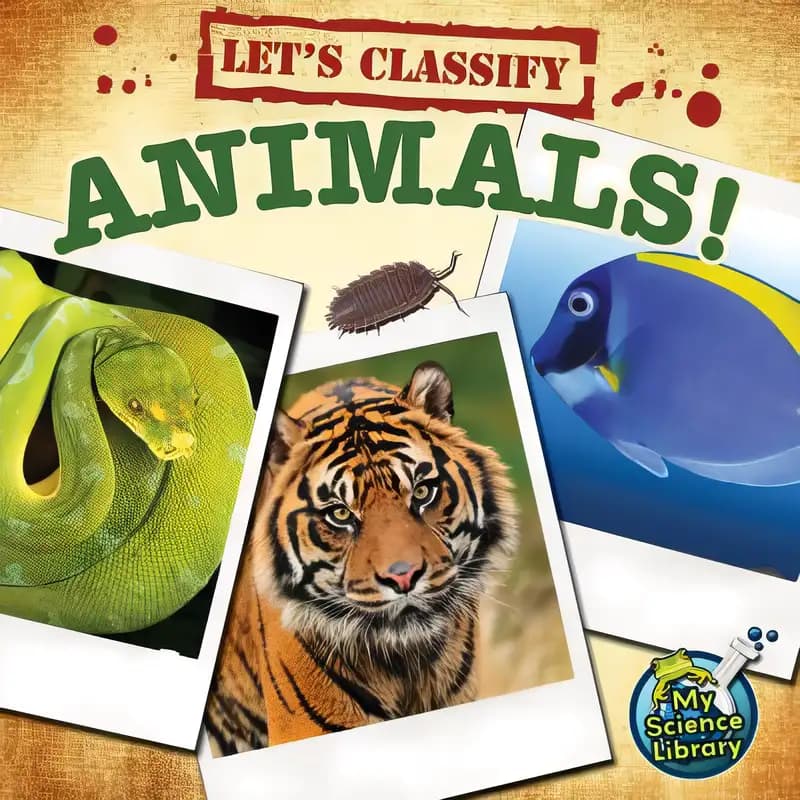
Let’s Classify Animals—Children’s Science Book About How To Classify Different Groups and Species of Animals, Grades 2-3 Leveled Readers, My Science Library (24 Pages)
Description
Let's Classify Animals is a 24-page children's book designed for second and third graders with a Lexile level of 600L. It is part of the My Science Library series and is published by Rourke Educational Media, which has been creating educational content since 1980. The book features easy-to-read pages with vibrant images and focuses on teaching young readers about animal classification and different species groups. It includes bolded vocabulary words, an index, and post-reading comprehension questions to help build reading skills and confidence. The book also provides extension activities to further explore the concepts presented.
Age
7-8
Text complexity
developing
Length
24 pages
Book in series
#5
Why to read
- Educational Value: The book provides a fundamental understanding of biological classification, which is a key concept in science education. It helps children in grades 2-3 grasp how different groups and species of animals are organized based on their characteristics.
- Engaging Content: With 24 pages of engaging content, the book is designed to capture the interest of young readers. The use of colorful illustrations and simple language makes learning about animal classification fun and accessible.
- Curriculum Support: 'Let’s Classify Animals' aligns with educational standards for science in grades 2-3. It supports classroom learning by providing a resource that teachers can use to supplement their science curriculum.
- Development of Critical Thinking: By learning to classify animals, children develop important analytical and critical thinking skills. They learn to observe, compare, and contrast different species, which are essential skills for scientific inquiry and understanding the natural world.