
Book details
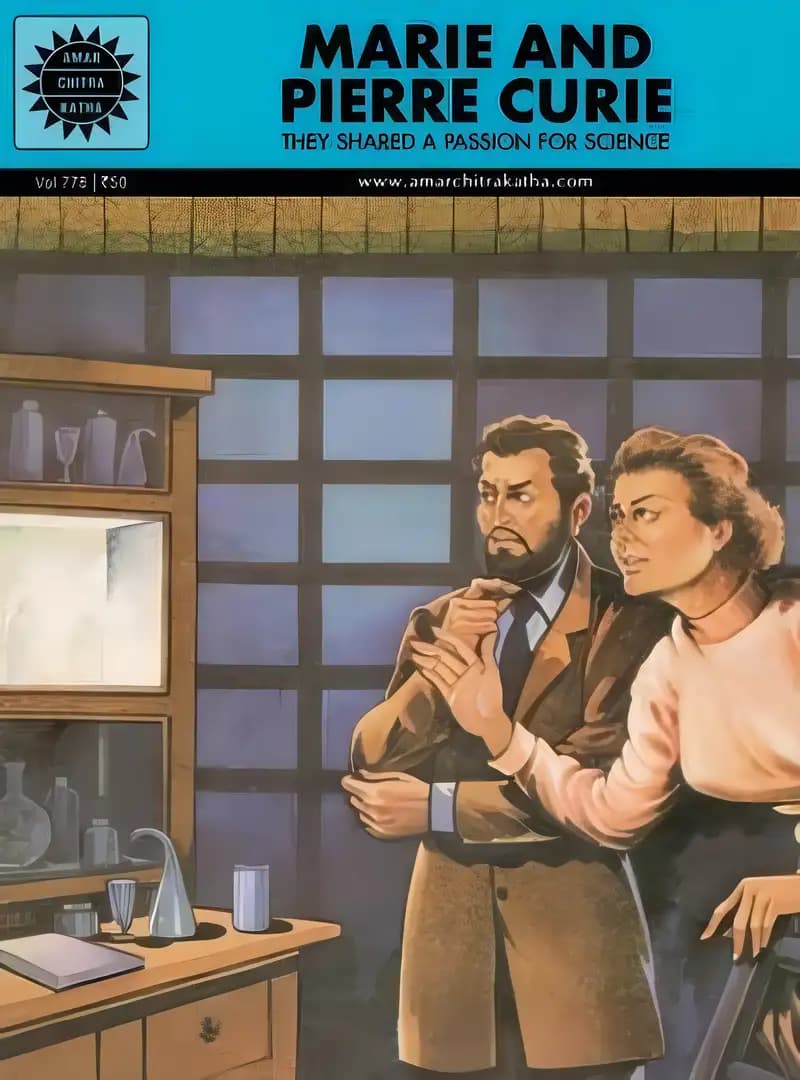
Marie and Pierre Curie
Description
Marie and Pierre Curie were pioneering scientists known for their groundbreaking work in radioactivity. Marie Curie, born Maria Sklodowska in Poland, moved to Paris to study physics and mathematics at the Sorbonne, where she met Pierre Curie, a French physicist. Together, they conducted research that led to the discovery of two new elements, polonium and radium. Their work on radioactivity earned Marie the Nobel Prize in Physics in 1903, which she shared with Pierre and Henri Becquerel. After Pierre's untimely death in 1906, Marie continued her research and became the first person to win two Nobel Prizes when she was awarded the Nobel Prize in Chemistry in 1911 for her work in radiochemistry. The Curies' discoveries contributed significantly to the fields of physics and chemistry and had profound implications for medicine and the understanding of atomic structure. This compilation of 101 tales from the Panchatantra aims to guide the young readers about wise conduct, human nature, and the right path for attaining success in life. Accompanied with beautiful illustrations and great morals, this book will inspire the child to follow the path of righteousness and abide by the wise rules of the world. The stories are written in simple language, which makes them easily understandable and keeps the child glued to the book for hours. Each story in the book gives advice that can be followed by children, as well as adults.
Age
6-12
Text complexity
proficient
Length
32 pages
Why to read
- Educational Value: The book 'Marie and Pierre Curie' by Margie Sastry provides an insightful look into the lives and scientific achievements of two of the most influential scientists in history, offering readers a chance to learn about their groundbreaking work in radioactivity and their contributions to physics and chemistry.
- Inspirational Story: Marie Curie's journey, in particular, is an inspiring tale of perseverance and dedication in the face of adversity, including overcoming gender barriers in a male-dominated field. Her story can motivate readers to pursue their own passions and overcome obstacles.
- Historical Context: Reading this book can give readers a better understanding of the historical context of the Curies' work, including the state of science at the turn of the 20th century and how their discoveries paved the way for future advancements.
- Appreciation for Scientific Progress: By learning about the Curies' meticulous research and the impact of their discoveries, readers can gain a deeper appreciation for the scientific method and the importance of research and innovation in advancing human knowledge and society.