
Book details
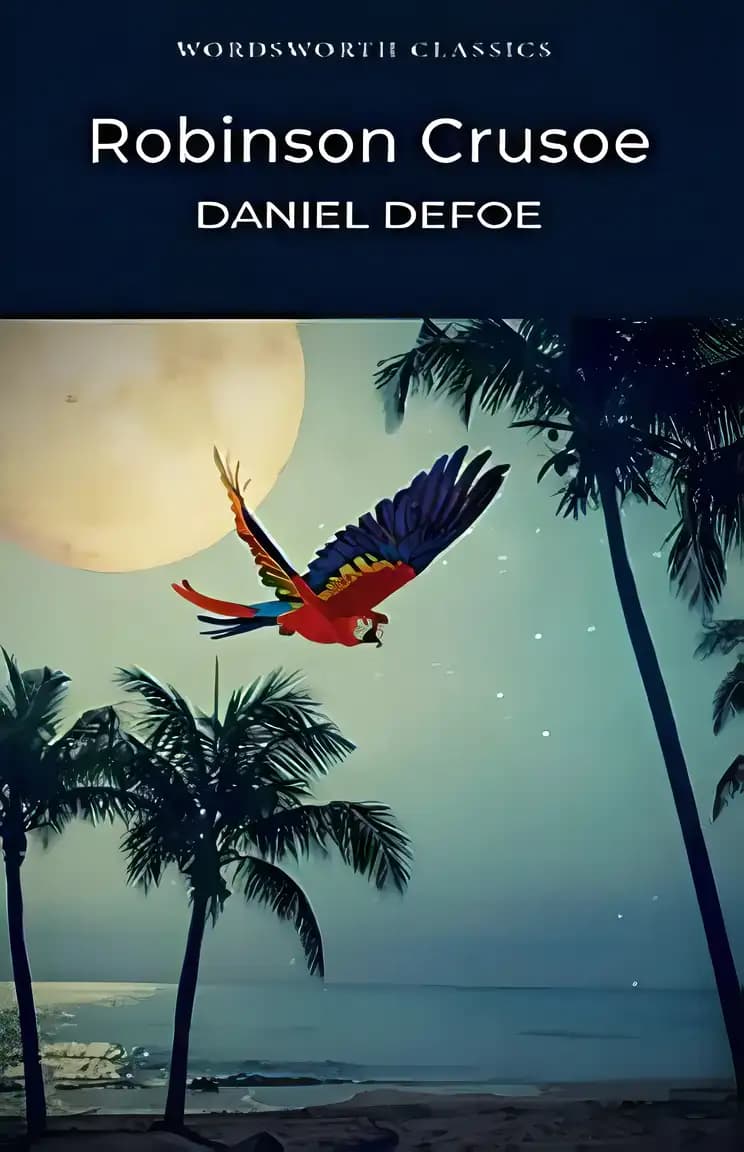
Robinson Crusoe
Description
Robinson Crusoe is a novel by Daniel Defoe, first published in 1719. It follows the story of Crusoe, who sets sail against his parents' wishes and survives a shipwreck, leading to a life of adventures on a deserted island. The novel has been immensely popular since its release, inspiring numerous adaptations and interpretations across various forms of media. It is celebrated for its themes of survival and human perseverance, and has been recognized by notable figures and cited in significant works such as Karl Marx's Das Kapital. This classic story of a shipwrecked mariner on a deserted island is perhaps the greatest adventure in all of English literature. Fleeing from pirates, Robinson Crusoe is swept ashore in a storm possessing only a knife, a box of tobacco, a pipe-and the will to survive. His is the saga of a man alone: a man who overcomes self-pity and despair to reconstruct his life; who painstakingly teaches himself how to fashion a pot, bake bread, build a canoe; and who, after twenty-four agonizing years of solitude, discovers a human footprint in the sand. Consistently popular since its first publication in 1719, Daniel Defoe's story of human endurance in an exotic, faraway land exerts a timeless appeal. The first important English novel, 'Robinson Crusoe' has taken its rightful place among the great myths of Western civilization.
Age
7-8
Text complexity
expert
Length
272 pages
Book in series
#1
Why to read
- Cultural Significance: 'Robinson Crusoe' is considered one of the earliest novels in English literature and has influenced countless other works. Reading it allows one to understand and appreciate its impact on literary history and culture.
- Themes of Survival and Ingenuity: The novel explores the human spirit's resilience and resourcefulness in the face of isolation and adversity. It can inspire readers to think about how they might use their own skills and creativity to overcome challenges.
- Exploration of Human Nature: Through the character of Crusoe and his experiences, the book delves into themes of civilization versus nature, self-sufficiency, and the desire for companionship, offering insights into the complexities of human psychology.
- Adventure and Escapism: 'Robinson Crusoe' is an adventure story at its core, providing readers with an escape to exotic locales and thrilling situations. It's an entertaining read that can transport one to a different time and place, offering a break from modern life.