
Book details
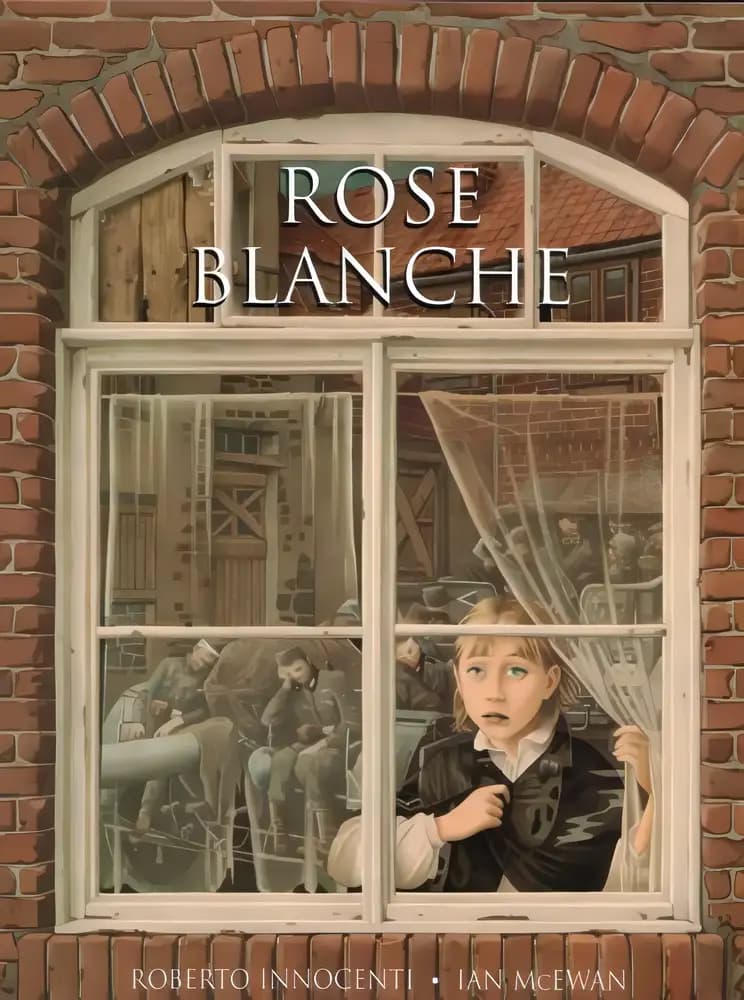
Rose Blanche
Description
Rose Blanche was the name of a group of young German citizens who, at their peril, protested against the war. Like them, Rose observes all the changes going on around her which others choose to ignore. She watches as the streets of her small German town fill with soldiers. One day she sees a little boy escaping from the back of a truck, only to be captured by the mayor and shoved back into it. Rose follows the truck to a desolate place out of town, where she discovers many other children, staring hungrily from behind an electric barbed wire fence. She starts bringing the children food, instinctively sensing the need for secrecy, even with her mother. Until the tide of the war turns and soldiers in different uniforms stream in from the East, and Rose and the imprisoned children disappear forever.
Age
6-8
Text complexity
developing
Length
32 pages
Why to read
- Historical Insight: 'Rose Blanche' offers readers a poignant glimpse into the impact of World War II on civilians, particularly through the eyes of a young girl, providing a unique perspective on the historical events and the human cost of war.
- Emotional Depth: Ian McEwan's storytelling is known for its emotional depth, and 'Rose Blanche' is no exception. The book explores themes of innocence, bravery, and the loss of childhood, which can resonate deeply with readers of all ages.
- Illustrative Artwork: The book is accompanied by evocative illustrations that complement the narrative and enhance the reader's experience. The artwork helps to convey the mood and setting of the story, making it more accessible and engaging, especially for younger readers.
- Moral Lessons: 'Rose Blanche' presents moral dilemmas and encourages readers to think about issues of right and wrong, compassion, and standing up for what is just. It serves as a valuable tool for discussing ethics and moral courage with children and adults alike.