
Book details
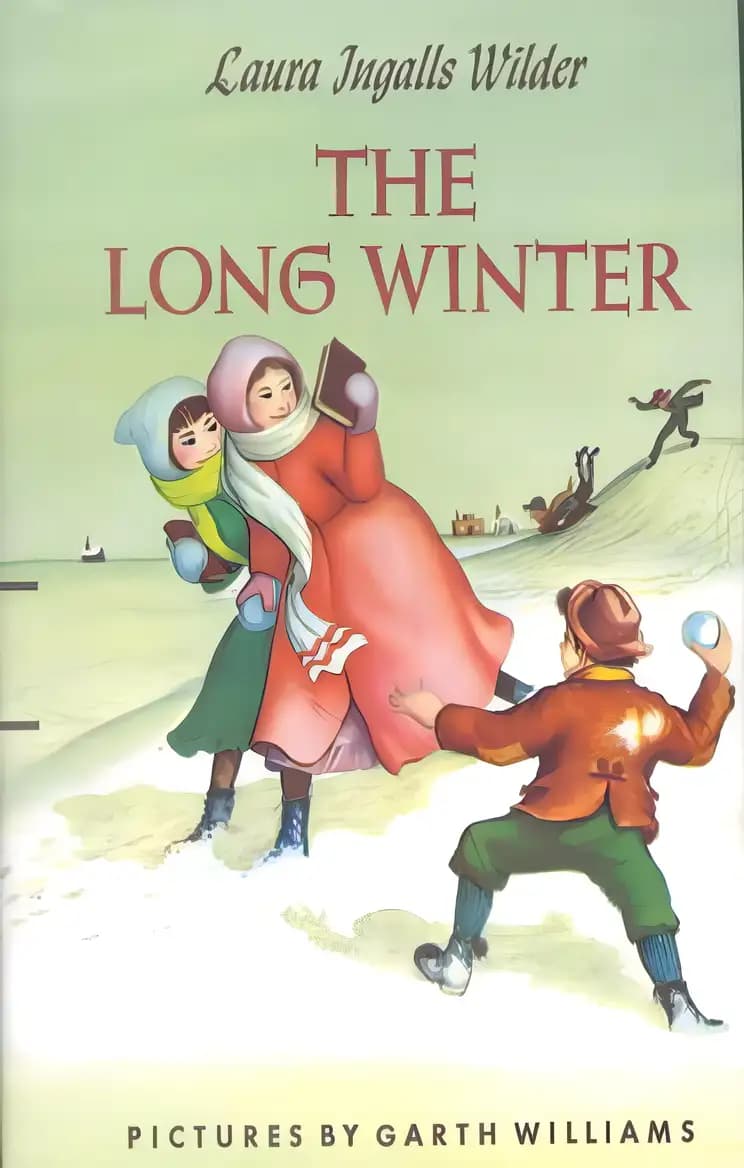
The Long Winter (Little House on the Prairie Book 6)
Description
The old Indian's warning predicted a harsh and extended winter, prompting Laura's father to relocate his family from their claim to his house in town for better protection against blizzards. The winter proved to be brutal with relentless storms, isolating the town and cutting off supplies as trains could not get through. The Ingalls family survived on minimal resources, burning hay for warmth and using a homemade button lamp for light. It wasn't until May that the snow melted enough for the first train to arrive, bringing with it their long-awaited Christmas turkey, still frozen. Meanwhile, on the desolate winter prairie, the townspeople faced severe conditions from October to April with no relief as trains failed to deliver essential food and coal, leading to starvation. Almanzo Wilder realized the gravity of the situation and knew he had to risk his life to save the town.
Age
7-11
Text complexity
intermediate
Length
335 pages
Book in series
#6
Why to read
- Historical Insight: 'The Long Winter' offers readers a vivid portrayal of pioneer life in the late 19th century, providing a detailed account of the challenges faced by families during harsh winters on the American frontier.
- Character Development: Through the trials of the Ingalls family, readers witness the growth and resilience of the characters, especially Laura, as they overcome adversity, showcasing themes of strength, perseverance, and family unity.
- Educational Value: The book is not only an engaging narrative but also serves as an educational tool that teaches about self-reliance, resourcefulness, and the history of American settlement, making it a valuable read for both young and adult audiences.
- Literary Merit: As part of the 'Little House on the Prairie' series, 'The Long Winter' is recognized for its literary quality, with Laura Ingalls Wilder's descriptive writing style bringing the story to life and making it a classic of children's literature.