
Book details
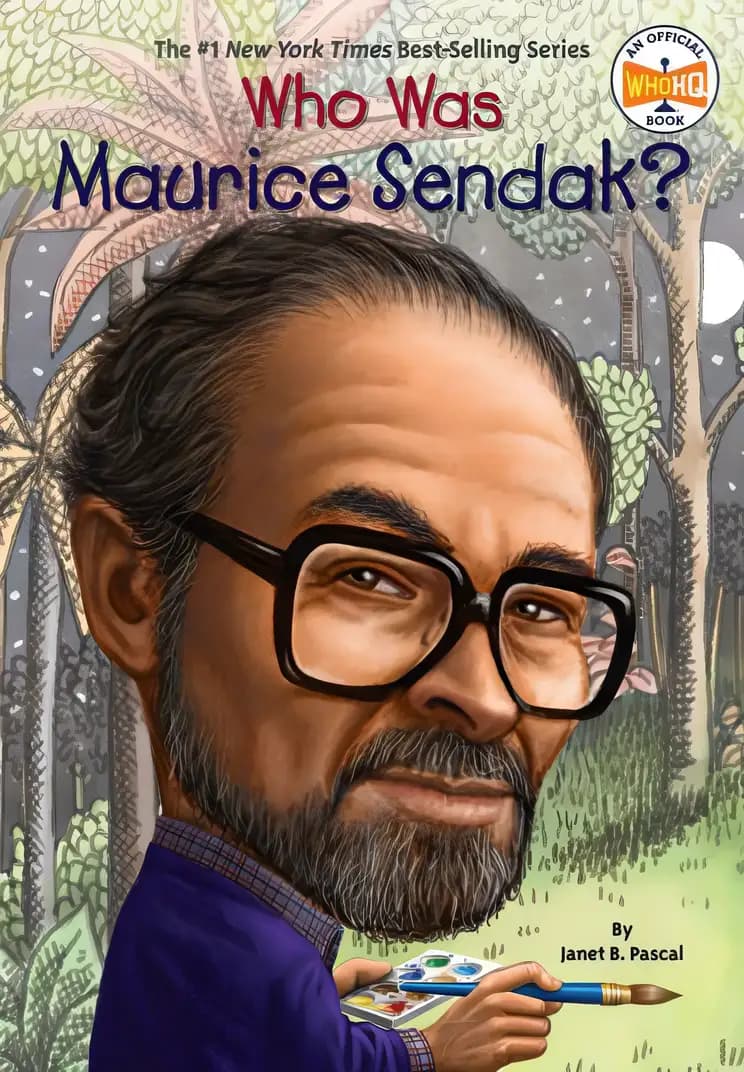
Who Was Maurice Sendak?
Description
Maurice Sendak, born on June 10, 1928, shared his birthday with Mickey Mouse's cartoon debut. Sendak, who developed a passion for cartoons and comics at an early age, decided to become an illustrator after watching Disney's Fantasia at age twelve. His early love for children's books was fueled by long periods of illness that kept him bedridden, during which he read extensively. While many of his stories were light and humorous, his most significant works, such as Where the Wild Things Are, In the Night Kitchen, and Outside Over There, explored themes of anger, jealousy, and abandonment, previously unexplored in children's picture books. This illustrated biography not only highlights his career achievements but also delves into his personal life, making it an ideal read for children and admirers of one of the most influential children's book artists of the twentieth century.
Age
8-12
Text complexity
proficient
Length
112 pages
Why to read
- Learn about a legendary figure: Reading 'Who Was Maurice Sendak?' provides an in-depth look at the life and career of one of the most influential children's book authors and illustrators of the 20th century, offering insight into his creative genius and lasting impact on literature and the arts.
- Inspiration for creativity: Maurice Sendak's unique approach to storytelling and illustration can serve as a source of inspiration for readers of all ages. His imaginative worlds and characters encourage readers to explore their own creativity and to appreciate the power of imagination.
- Understanding the history of children's literature: The book delves into the evolution of children's literature and how Sendak's work, such as 'Where the Wild Things Are,' challenged existing norms and conventions, paving the way for more sophisticated and emotionally honest children's books.
- Cultural significance: Maurice Sendak's books have not only entertained but also resonated with generations of children and adults alike. Understanding his life story helps readers appreciate the cultural significance of his work and its influence on popular culture, education, and the broader discourse on childhood.